Aftermath of Battle: Pointe du Hoc

Today we’re continuing our memory visit to Normandy’s Omaha Beach and specifically, the promontory at Pointe du Hoc. If you read our previous post, you know that the coastal artillery battery sited on this high ground was a primary objective for June 6th, the first day of the D-Day assault.

This battery sat atop a 100 foot high cliff and loomed large in Allied planning. The Ranger groups training in the United Kingdom spent months preparing for numerous cliff assault scenarios. The objective was assigned to the 2nd Ranger battalion. Thanks to their training and expert naval gunfire, they achieved their objectives. On reaching the summit, they discovered that a few weeks before D-Day, the captured French artillery making up this battery had been relocated to a nearby orchard. The Rangers found these large guns and disabled them with thermite grenades.

The “featured film” today, from the US Navy motion picture film material at the National Archives and Records Administration, is perhaps the earliest film of the aftermath of the Rangers’ assault. WARNING! This film shows dead casualties of the assault.

The film (identified by my sharp-eyed colleague, Thomas Hogan) opens with a scene of wounded being ferried back to the ships in the English Channel. The action quickly moves to a landing party that appears to be surveying the battlefield. Shell holes and abandoned equipment are all around the tide line. The camera quickly pans the high cliffs from below and settles on a precarious rope ladder. The landing party climbs the ladder, and the following shot scans a scene of desolation. The German strong points have all been demolished, if not by the Rangers, then by naval gunfire support. The party then climbs down the rope ladder, as the camera pans down, recording that the naval gunfire (falling short) had effectively pock marked the tidal zone with large craters. The following shots are heavily overexposed, and depicts a USO show taking place on the USS Texas.

The only available written description for these film is this (from the National Archives catalog): “This unedited film shows coastal gun batteries, dead German soldiers, and wounded US military personnel as they were moved from landing craft to the USS Texas (BB-35).” The film unmistakably depicts the scaling ladder used by the Rangers at Pointe du Hoc. The inadequate description, combined with the unremarkable title given: “Coastal Gun Batteries: Dead Germans” suggests that the initial catalogers may have not had access to any of the written documentation that should have accompanied the film. The film may have been taken by a Chief Photographer or Photographer’s mate from the USS Texas as part of the landing party. The state of the battlefield, with bodies un-recovered, suggest this may have been only a day or two after the Rangers’ assault. Because the invasion was planned for mid-tide, with an incoming tide, the fact that in the film the tide was low, suggests that this could have been shot on the afternoon of June 6th at the earliest.

U.S. Navy still photograph shows the rope ladder used by the Rangers at Pointe du Hoc

Inadequately described film materials are “par for the course” in government film archives and in many other contexts. The practiced, critical eye of a professional media researcher can ensure that your production, article or publication has the content you need to make a high-impact presentation.
D-Day/Pointe du Hoc footage

This “found footage” from the National Archives and Records Administration (NARA) begins with casualties returning to England from the Normandy invasion. The last minute or two shows naval vessels shelling Omaha Beach. The high cliffs in the final shots are unmistakable as Pointe du Hoc, the highest point along the invasion beaches, the site of captured French 155mm artillery, and a target for the 2nd U.S. Army Ranger Battalion. Shot at eye-level, one can’t really make out the “point”, except for some shallow rocks. If you look carefully, in the last thirty seconds you can just make out the figures of troops at the foot of a scree slope before a tall cliff, without a lot of additional supplies, equipment and reinforcements. The tide is in as well, which builds a strong case that this is later in the morning of June 6th, so this could be the only moving image footage of the Rangers’ assault on the Axis position at Pointe du Hoc. Many thanks to sharp-eyed fellow researcher Thomas Hogan for identifying this film!

The included slates identify this as footage from Coast Guard, U.S. Navy and OSS cinematographers despite the reel being found in the holdings of the U.S. Army Signal Corps. OSS footage of the invasion is usually found in Record Group 428, the records of the Navy Photographic Center.

This footage is described in the NARA Catalog, but without identifying the location, so ordinarily, this footage would be overlooked. A knowledgeable researcher will recognize what they see. Choose a professional media researcher for your next production or publication! Researchers add value!

UPDATE:

Thanks to an upgraded 4K transfer from the archival film, I was able to locate the scene of the first section of the film, showing the incoming casualties returning to Britain as Weymouth Harbor, by identifying the business sign for “Cosen and Co Ltd”. Photographic Specialist Clarence “Sam” Moran was the photographer. He was 42 at the time of the invasion.

The photographer for the second segment was Lt. Cmdr. Allen G. Siegler, born in 1892 and was old enough to have registered for the draft in World War I. He had established a career as a cinematographer in Southern California beginning in 1914 and was an member of the American Society of Cinematographers. He would have been 52 years old at the time this film was taken. Both men were early volunteers for the Naval Reserve film unit founded by John Ford, which became the basis for the Field Photographic Branch of the Office of Strategic Services (OSS) the wartime predecessor of the Central Intelligence Agency.

Further research details that Lt. Cmdr. Siegler was detailed to the destroyer USS Satterlee (DD-626) during the invasion. The Satterlee is known to have the naval gunfire support mission for the Army Rangers assault on Pointe du Hoc. This help builds a strong circumstantial case that this was shot during the Rangers’ mission. Thanks to the extended resolution offered by a 4K transfer, we can clearly see details we only speculated on before. Landing craft pass from left to right in front of the camera, together with a Landing Craft Control ship. At about 9:19 you can clearly see figures moving at the base of a notch in a cliff face. This was all shot from quite a distance, on a moving ship, which makes the camera tracking ability in those final frames impressive!

Home Front Newsreels of World War I

This moving image clip was created by the U.S. Government’s “Committee for Public Information”, the centralized public communication entity responsible for spreading the Allied viewpoint during World War I. The “Official War Review” newsreel was created by the U.S. Government, and distributed by U.S. Pathe. While the National Archives has the textual records created by the Committee, it appears the original film was not accessioned and preserved. The footage itself exists in many other forms, including the footage collection created by the U.S. Army Signal Corps. What is unique is the presentation, edited for screening to home-front audiences. As often happens in film of this vintage, the author has yet to locate the original film elements of these newsreels. Because of the age of the film, the lack of any “after-market” for newsreel content at the time, and the flammable nature of the nitro-cellulose film stock used in the U.S. up until 1950, the original media may no longer exist, something common to many films from the silent era. This particular clip shows evidence of nitrate decomposition, although the print I copied was a safety film copy. It is likely that the film print reached the end of its distribution window and was abandoned once it was out of date. Prints like this show dirt and scratches from a hard life circulating at local cinemas.

As far as I can tell, only six of these newsreel releases exist at the U.S. National Archives and Records Administration (“NARA”), and another two at the Library of Congress. The six at NARA only exist because they were donated to the U.S. Government by the University of Colorado Medical School. How it came to be at that institution is a mystery, but the University may have been involved in training doctors for military service. According to a published Report from the House of Representatives from 1940, 62 other films from this collection (including 12 of these newsreel releases) were recommended for disposal due to advanced nitrate decomposition. The Archivist of the United States at the time also remarked “that said records have no permanent value or historical interest to the National Archives.” It may be that other releases in this series exist at other repositories.

Films like these aren’t available from the National Archives on-line Catalog and are accessible only to researchers able to visit the National Archives facilities and copy for themselves. Professional researchers add value to your production or publication. Ask me how!

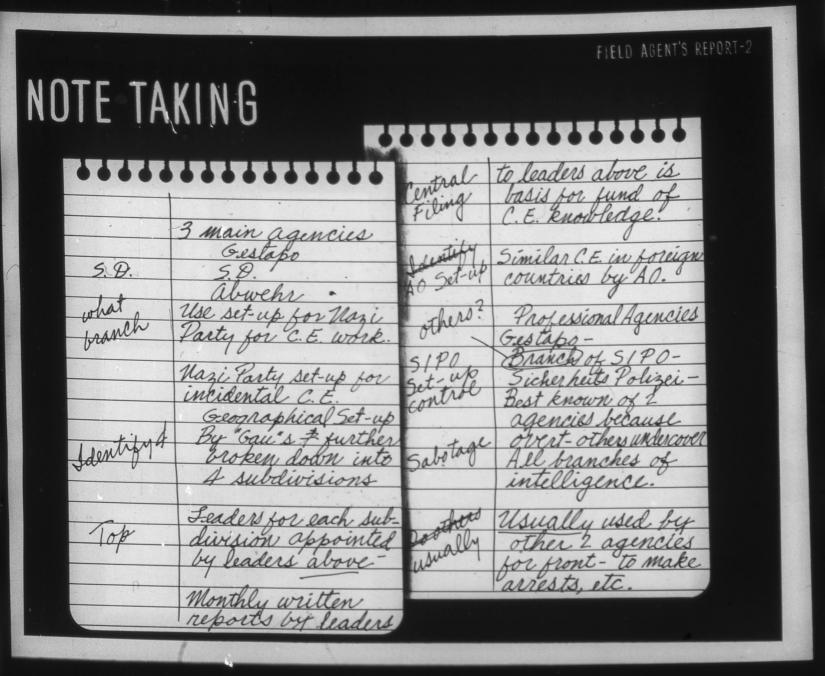
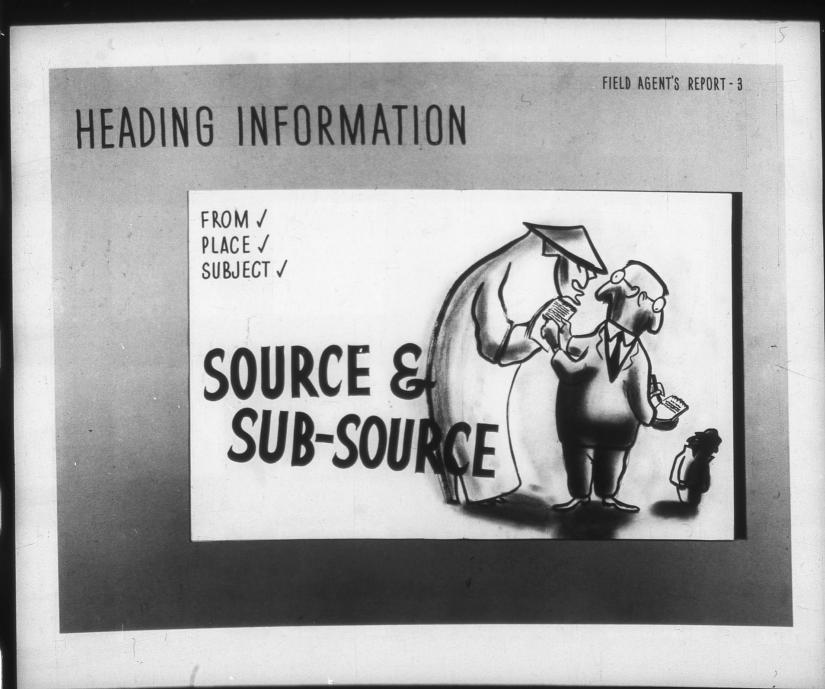
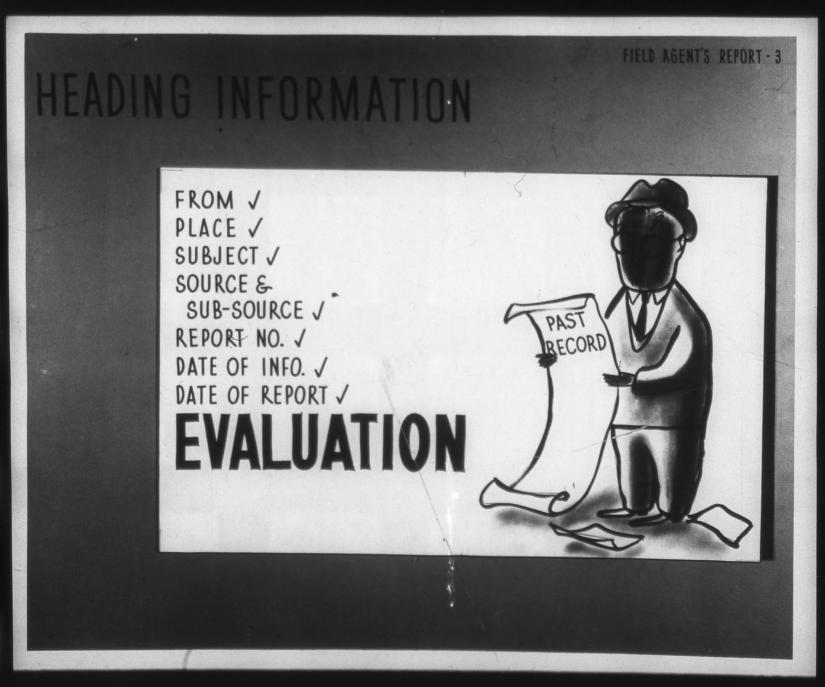
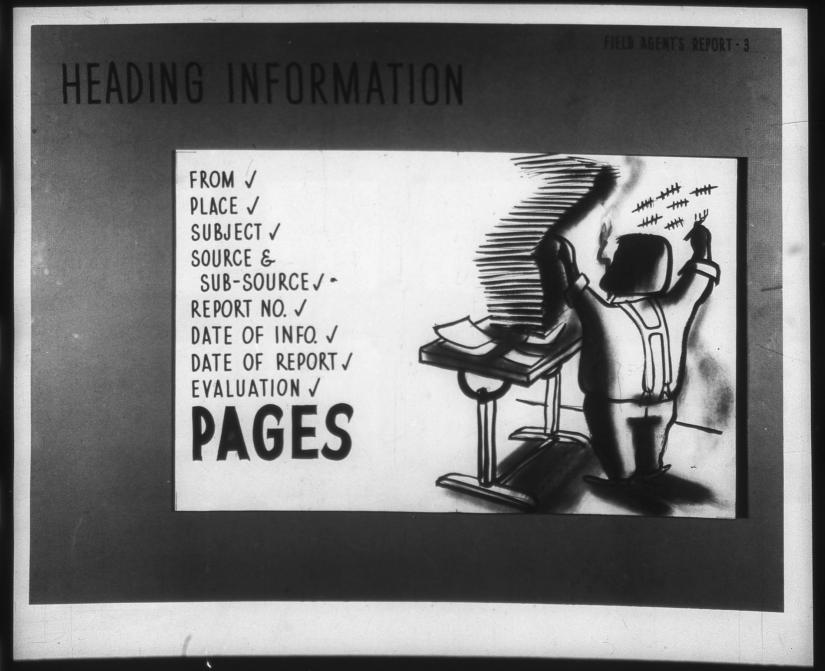
Ur-PowerPoint Training for World War II Spies

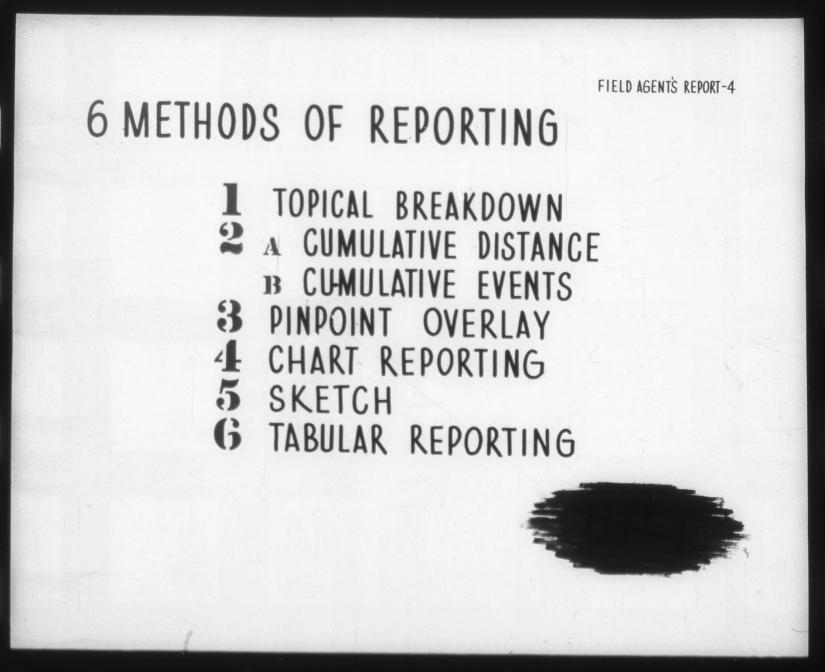
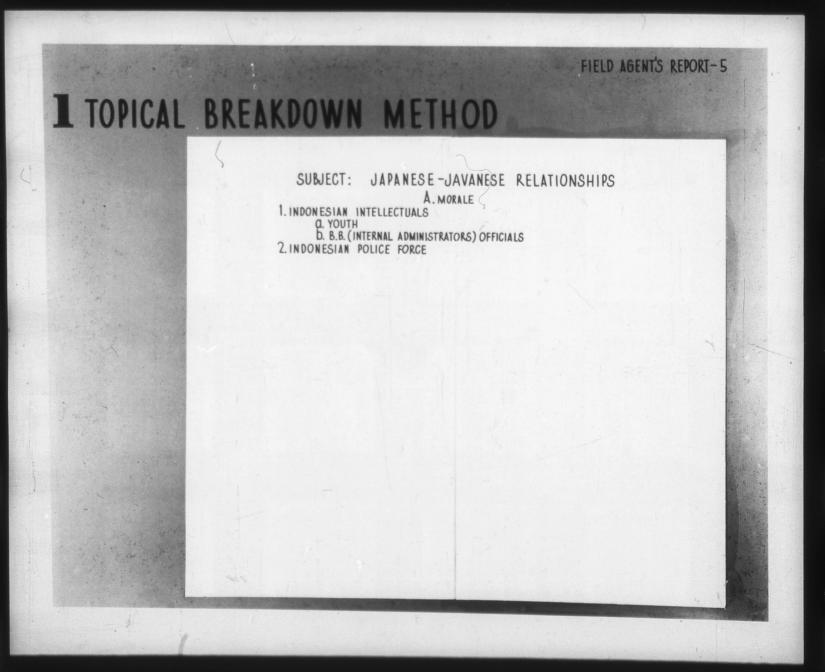
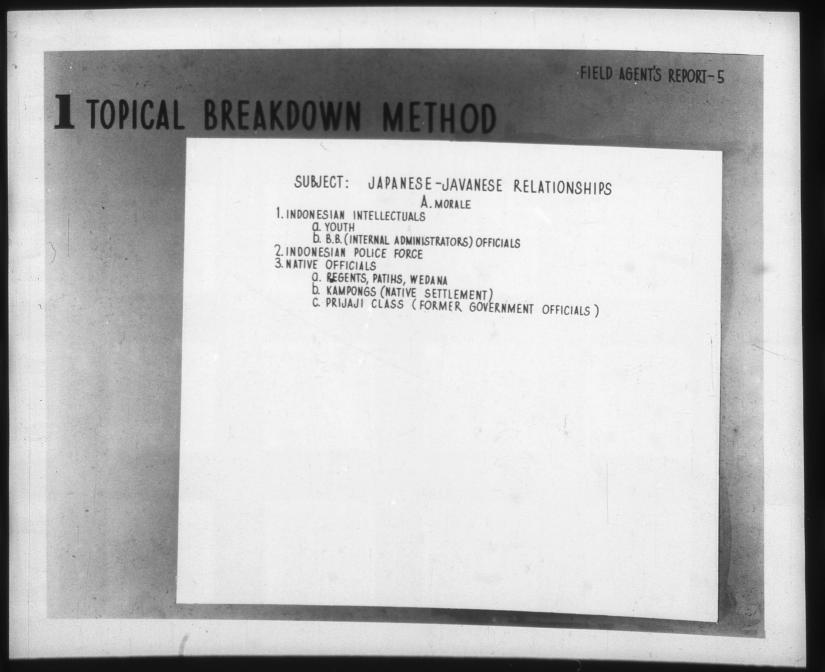
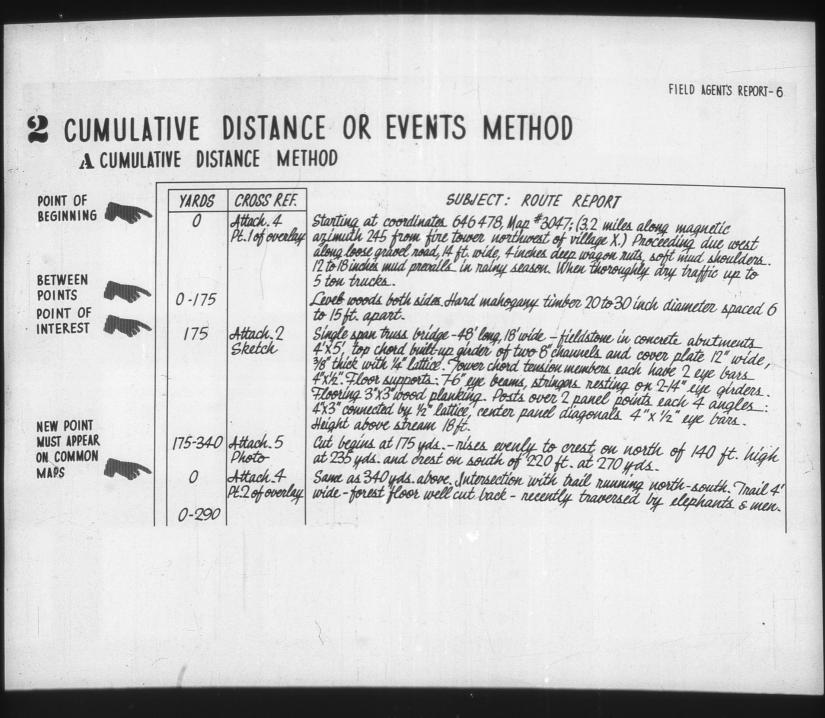
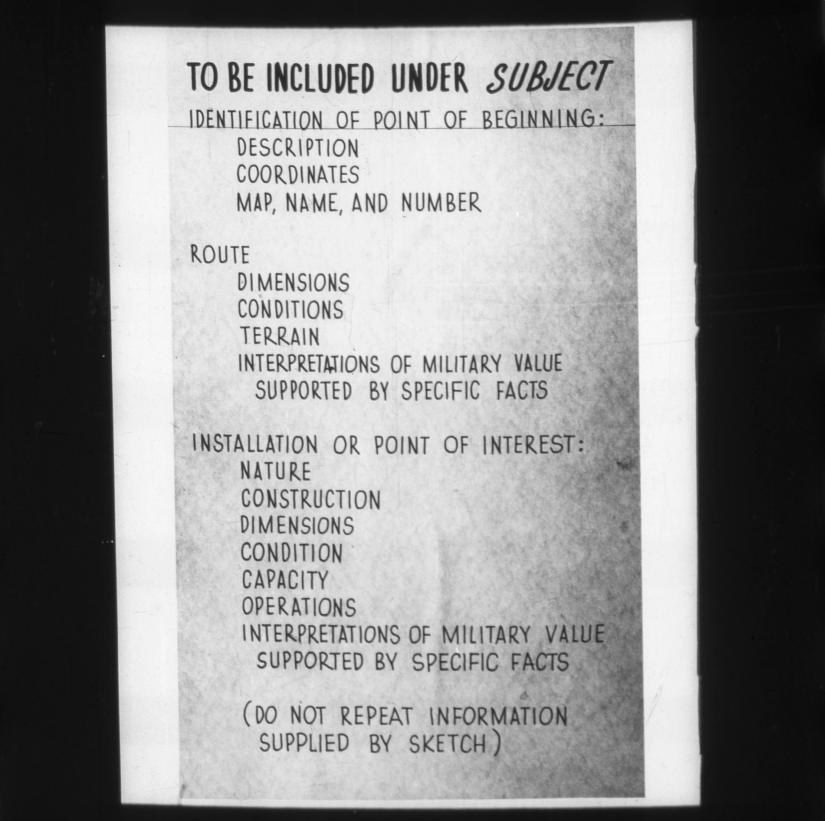
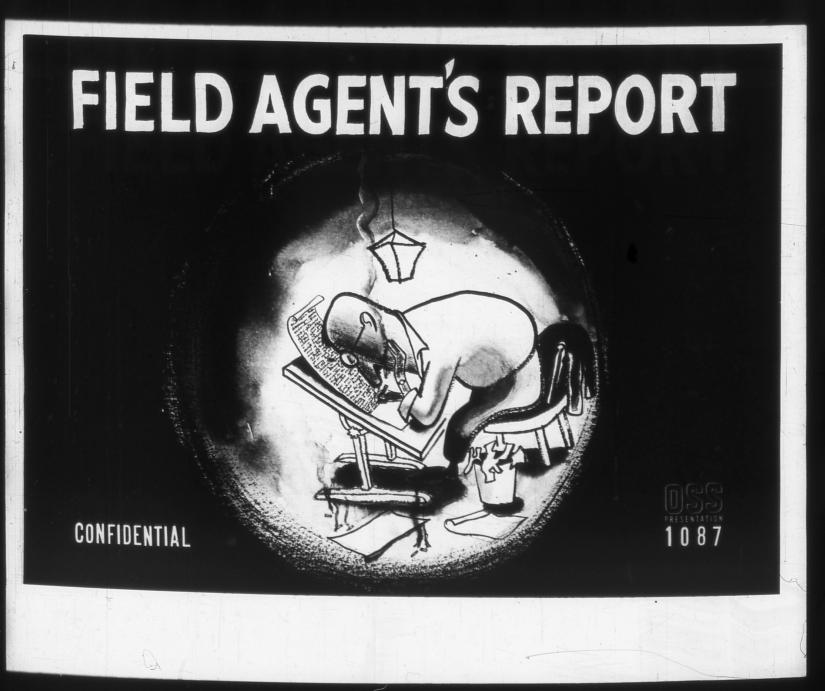
Found in the records of the World War II era U.S. intelligence arm, the Office of Strategic Services (OSS), this slideshow was originally a filmstrip, a format many older readers may remember from school. It was designed to drill student agent candidates in the format(s) used for reporting wartime intelligence information by OSS agents in the field. The drawings, unattributed, point to the talents many OSS personnel brought to presentations and display a subtle sense of humor, which may have made long hours in the classroom pass more quickly.

This strip was found in the National, Archives and Records Administration (NARA), un-preserved in a series of OSS training aids and was not accessible until I requested these images be digitized. Only a generalized description of the series exists in the catalog of the National Archives.

Professional researchers can bring this kind of detail into daylight, adding “sizzle” to your production, publication, or presentation.

Public Domain Day – 2024

Film producers may be familiar with the National Archives and Records Administration (“NARA”) as a source of “uncopyrightable” moving images created by the United States Government, but did you know that a substantial body of copyrighted film content also exists in its holdings? Material can be collected by Federal Agencies or donated by production companies (in this case the Fox Movietone collection), individuals, and even former Presidents (most of the content in NARA’s Presidential LIbrary system prior to 1981 was donated!).

Thanks to changes in the Copyright Law in the US in 1977 and 1978, all films created in 1928, including this newsreel item, an early talkie from 1928, fell into the Public Domain on January 1st of this year. It features the first filmed interview of famed playwright and author George Bernard Shaw. You can hear his approaching footsteps and hints of birdsong from the country setting. His meandering interview touches on many topics, even, amusingly, his impression of Italian dictator Benito Mussolini! The audio recording for film was still very new and Fox Movietone was in its first year of operation, so they were charmingly still figuring out how to use this new technology. This particular film was recorded off a flatbed film viewer in NARA’s research room in College Park, Maryland.

Older content finds its way onto the web with regularity, but less than 10% of the moving image content in the National Archives’ collections is available digitally on-line. Professional researchers have the ability to locate content that is only available on-site in many institutions nation-wide. Contact an archival media researcher today to add special value to your production or publication!