

This World War II US Navy footage found at the National Archives and Records Administration shows combat footage from a minesweeping operation off of New Guinea. Unremarked for decades, a short segment of film at the end of this reel is unrelated footage from a camera affixed to a landing craft, LCI(L), off the coast of Normandy, France for the D-Day seaborne assault on Europe.
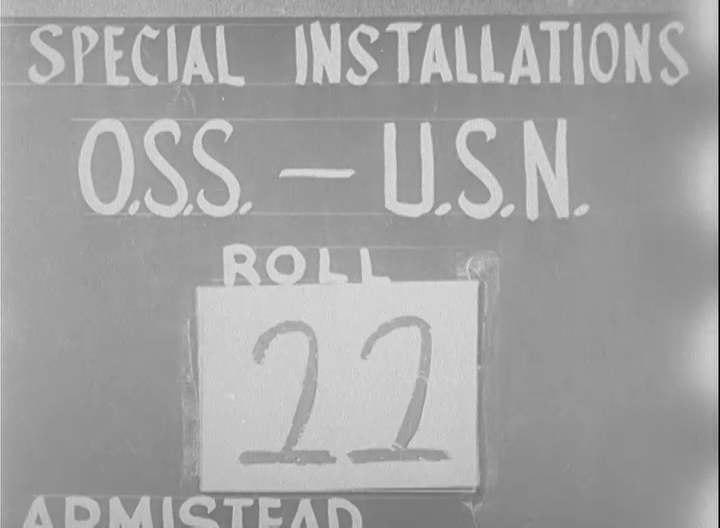
The National Archives on-line catalog entry contains the text of the US Navy’s shot descriptions. The last segment, starting at about 9:44, is undescribed. My sharp-eyed colleague, Tom Hogan, identified the footage. Based on unique physical characteristics of the boat, he has identified this as LCI(L)-88. That particular boat was one of several landing craft selected by the Office of Strategic Services (OSS) for the installation of a fixed motion picture film camera of the unloading operations.
A team from the OSS’s “Field Photographic Division”, commanded by John Ford, spearheaded a crash program to install the cameras in April and May of 1944. Below is a screenshot of the prepared title that appears in this segment.
On-line descriptive material is sometimes incomplete, misleading or just plain wrong. A professional media researcher lends a critical eye to material available on-line. Add value to your project, presentation or publication!
 Historicity Research Services