

62 years ago, in an article appearing in The American Legion magazine, film director John Ford recalled D-Day on the 20th anniversary of Operation Neptune, the naval assault on Normandy. Ford was in charge of Navy and Coast Guard photographic assets for the invasion. Confessing that his recollections were fuzzy and disconnected, Ford recalled the creation of hundreds of reels of black and white and color (Kodachrome) film and a 72-hour rush to edit their take. The final product, subject to wartime censorship, was released to the newsreels of the day. The newsreel “take” is what most Americans saw and remember to this day.
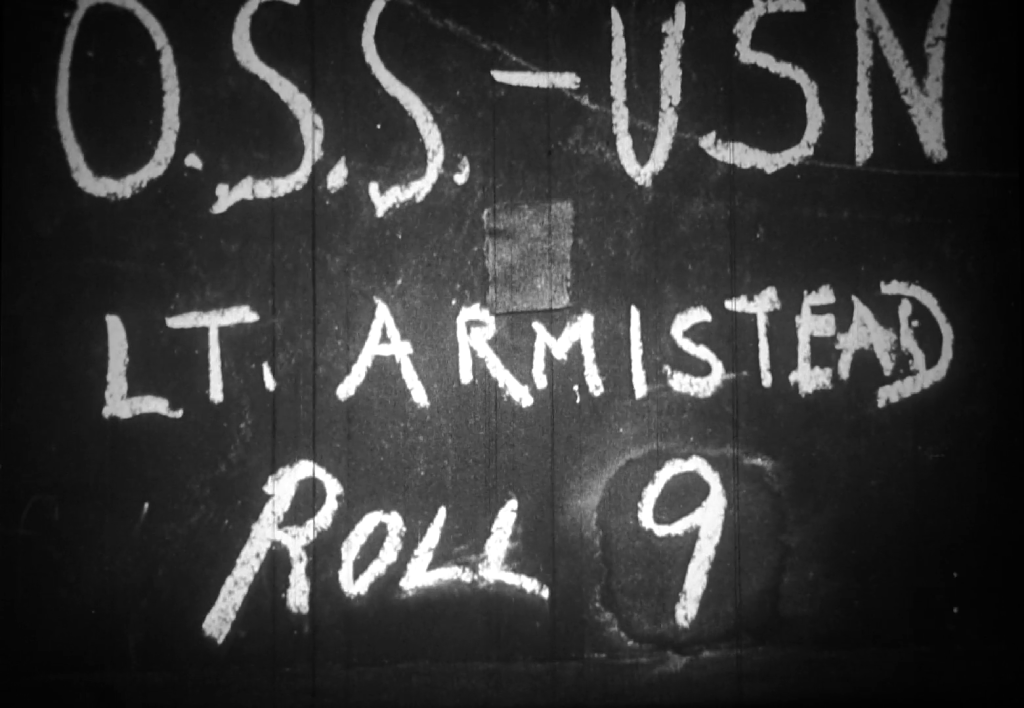
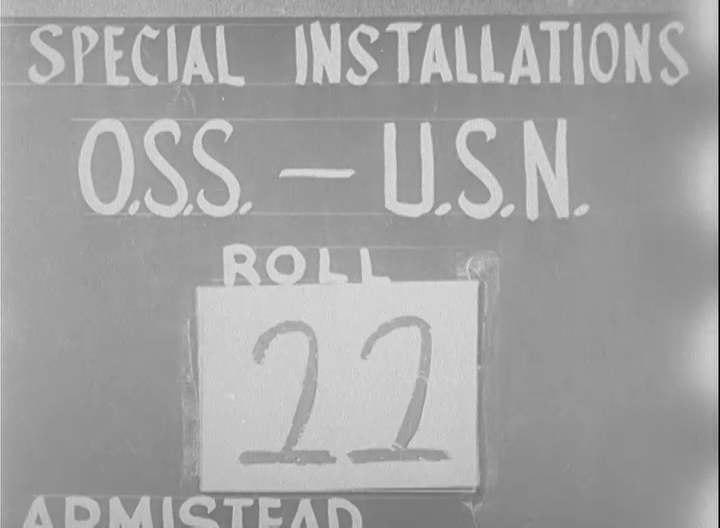
Ford’s “missing” D-Day film quickly became encrusted with mythology. Author Stephen Ambrose and others repeated a claim that a film report in color of about 100 minutes was produced by Ford’s team. The reality is that hundreds of hours of D-Day film coverage, including some shot in color on 16mm Kodachrome film exist at the National Archives. The subject matter is mostly of the Naval side of the invasion. The film was shot by OSS photographers, as well as regular Navy and Coast Guard photographers under the command of Commander John Ford.
A film report was made by OSS Field Photographic, John Ford’s command, at the request of the Supreme Headquarters Allied Expeditionary Forces (SHAEF). The request was made on D+4, or June 10th, so little or no extra time was available for different edits.
This is the film I discovered, hiding in plain sight, at the National Archives in 2014. It used color film as a partial source, but the production was black and white. It was four reels, comprising about 33 minutes. No evidence of a color film version or a 100 minute edition has been found. Given what we know about the effort to produce the film, it’s unreasonable to expect multiple versions. This film was the product of the 72-hour edit session that Ford recalls.
Another “mystery” of D-Day combat photography is the question of the alleged film of the invasion shot by George Hjorth. He claimed that he shot multiple rolls of 16mm color film from a position behind German lines on the beach. In 2025, I discovered what is essentially the Field Photographic “production file” for the whole Navy/Coast Guard combat camera effort for Operation Neptune. In it is a letter written by Hjorth describing his combat stations during the invasion.
Hjorth was stationed on board the Destroyer Hobson (DD-464). He recounts witnessing the landing craft going in, naval rocket support firing, the sinking of the destroyer Cory and the recovery of survivors. Furthermore, he is described as being issued a Speed Graphic still camera and a bomb-spotter Eyemo camera (35mm motion picture camera), but not the 16mm film camera he claimed. Hjorth served in combat on D-Day with distinction, but his later claims of filming on the beaches of Normandy are not supported by any evidence.
Finally, there is the question of the possible loss of D-Day footage overboard, as an officer scrambled up a cargo net of a transport, returning from the beach with a duffel full of exposed film. I have heard the same story from many people that were in a position to know over many years. In my 2014 blog post for NARA, I found documents identifying Major William Ulman as having been tasked with retrieving exposed film at 0900 hours on Utah Beach on D-Day and returning without them. The documents state that he was unable to make contact with any photographers or caches of exposed film in time for his departure. Perhaps unfairly, many have identified Ulman as the officer noted. I will say that I have been unable to pin down an original source of the “duffel bag” story, so this may be one encrusted myth that survives, barely.
Mysteries still exist with regard to D-Day combat camera operations. When did John Ford first go ashore after D-Day? Where are the original film and production file for the SHAEF/OSS film? For that matter, where are the original photographers’ “dope sheets” describing the D-Day film that was shot? Ultimately, John Ford himself has the last word, from “The Man Who Shot Liberty Valance”: “When the legend becomes fact, print the legend.” Perhaps whatever truths we find in the records, the legend abides.
 Historicity Research Services