D-Day/Pointe du Hoc footage

This “found footage” from the National Archives and Records Administration (NARA) begins with casualties returning to England from the Normandy invasion. The last minute or two shows naval vessels shelling Omaha Beach. The high cliffs in the final shots are unmistakable as Pointe du Hoc, the highest point along the invasion beaches, the site of captured French 155mm artillery, and a target for the 2nd U.S. Army Ranger Battalion. Shot at eye-level, one can’t really make out the “point”, except for some shallow rocks. If you look carefully, in the last thirty seconds you can just make out the figures of troops at the foot of a scree slope before a tall cliff, without a lot of additional supplies, equipment and reinforcements. The tide is in as well, which builds a strong case that this is later in the morning of June 6th, so this could be the only moving image footage of the Rangers’ assault on the Axis position at Pointe du Hoc. Many thanks to sharp-eyed fellow researcher Thomas Hogan for identifying this film!

The included slates identify this as footage from Coast Guard, U.S. Navy and OSS cinematographers despite the reel being found in the holdings of the U.S. Army Signal Corps. OSS footage of the invasion is usually found in Record Group 428, the records of the Navy Photographic Center.

This footage is described in the NARA Catalog, but without identifying the location, so ordinarily, this footage would be overlooked. A knowledgeable researcher will recognize what they see. Choose a professional media researcher for your next production or publication! Researchers add value!

UPDATE:

Thanks to an upgraded 4K transfer from the archival film, I was able to locate the scene of the first section of the film, showing the incoming casualties returning to Britain as Weymouth Harbor, by identifying the business sign for “Cosen and Co Ltd”. Photographic Specialist Clarence “Sam” Moran was the photographer. He was 42 at the time of the invasion.

The photographer for the second segment was Lt. Cmdr. Allen G. Siegler, born in 1892 and was old enough to have registered for the draft in World War I. He had established a career as a cinematographer in Southern California beginning in 1914 and was an member of the American Society of Cinematographers. He would have been 52 years old at the time this film was taken. Both men were early volunteers for the Naval Reserve film unit founded by John Ford, which became the basis for the Field Photographic Branch of the Office of Strategic Services (OSS) the wartime predecessor of the Central Intelligence Agency.

Further research details that Lt. Cmdr. Siegler was detailed to the destroyer USS Satterlee (DD-626) during the invasion. The Satterlee is known to have the naval gunfire support mission for the Army Rangers assault on Pointe du Hoc. This help builds a strong circumstantial case that this was shot during the Rangers’ mission. Thanks to the extended resolution offered by a 4K transfer, we can clearly see details we only speculated on before. Landing craft pass from left to right in front of the camera, together with a Landing Craft Control ship. At about 9:19 you can clearly see figures moving at the base of a notch in a cliff face. This was all shot from quite a distance, on a moving ship, which makes the camera tracking ability in those final frames impressive!
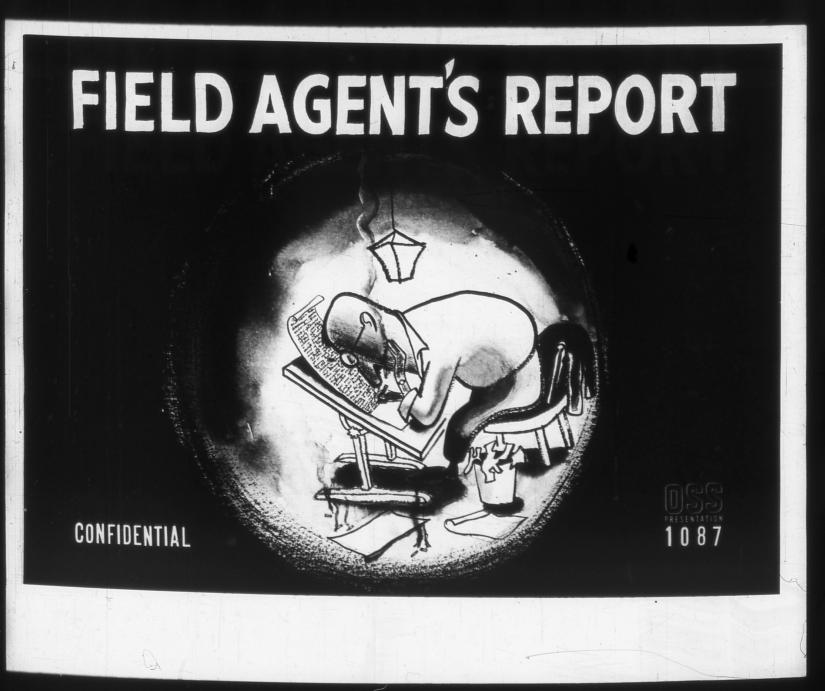
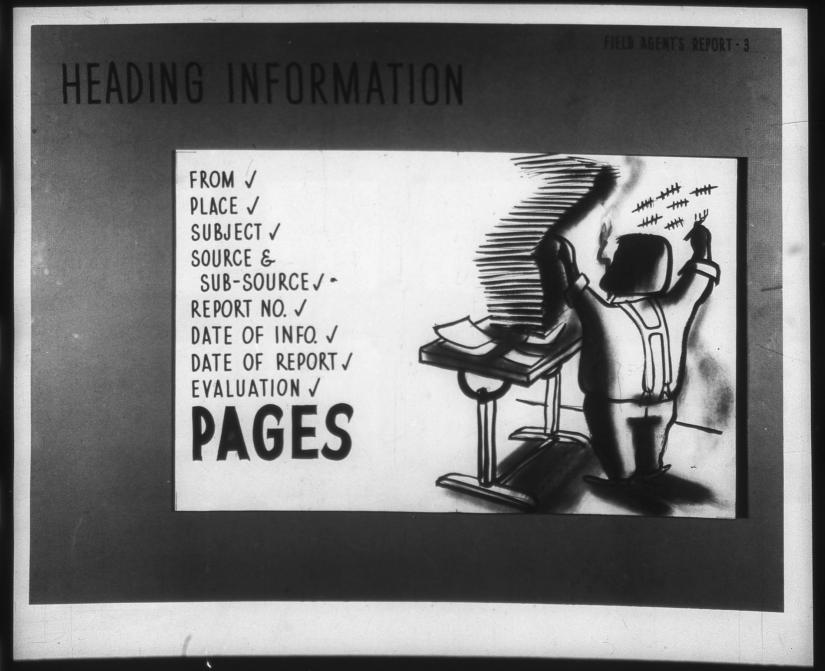
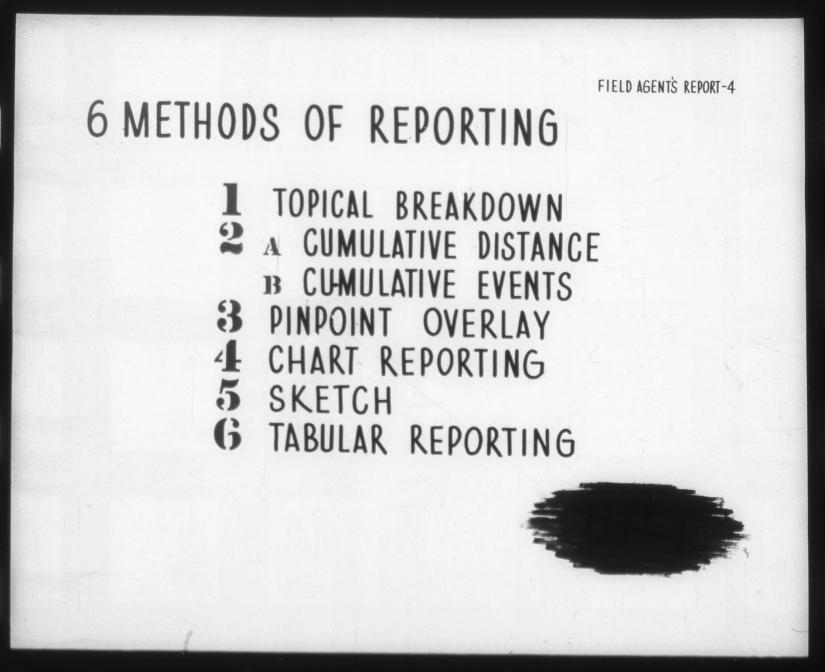
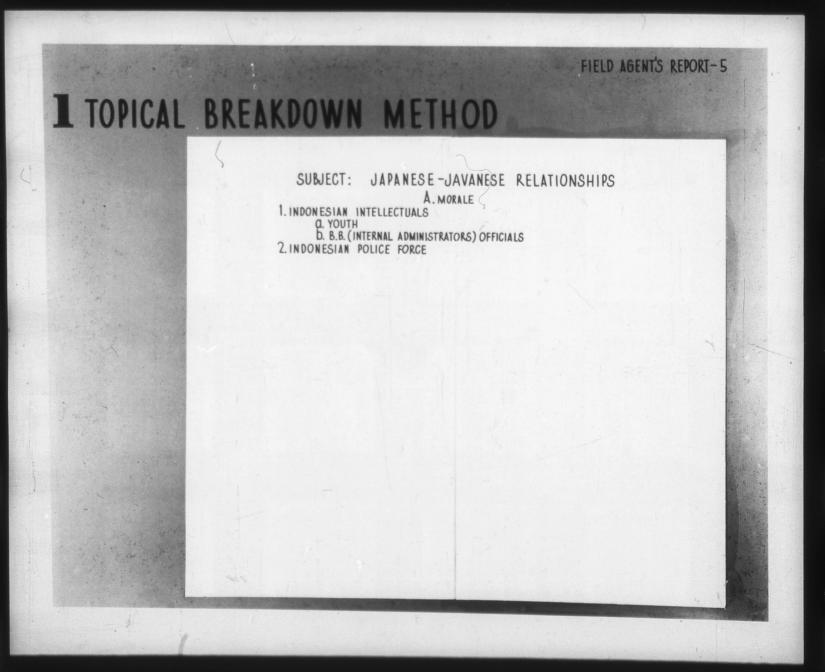
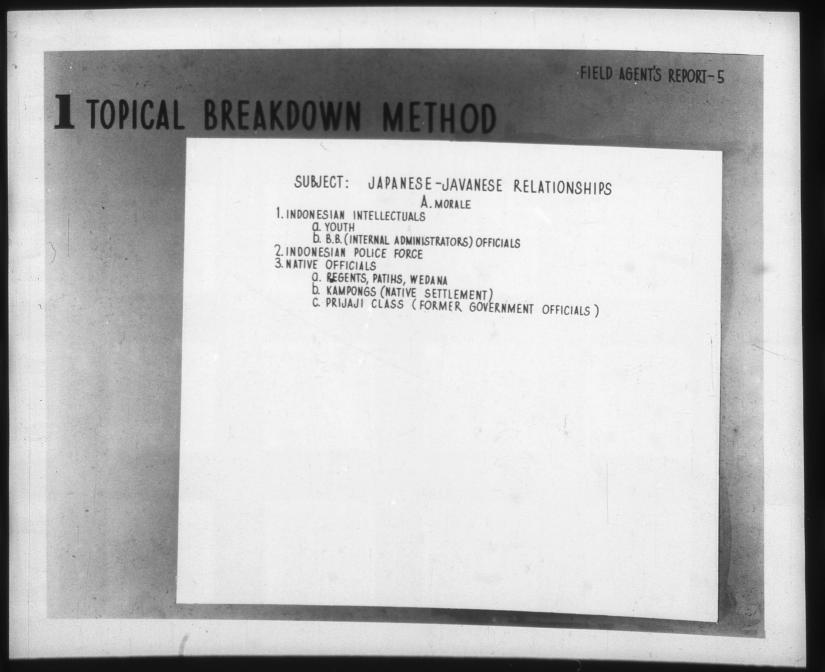
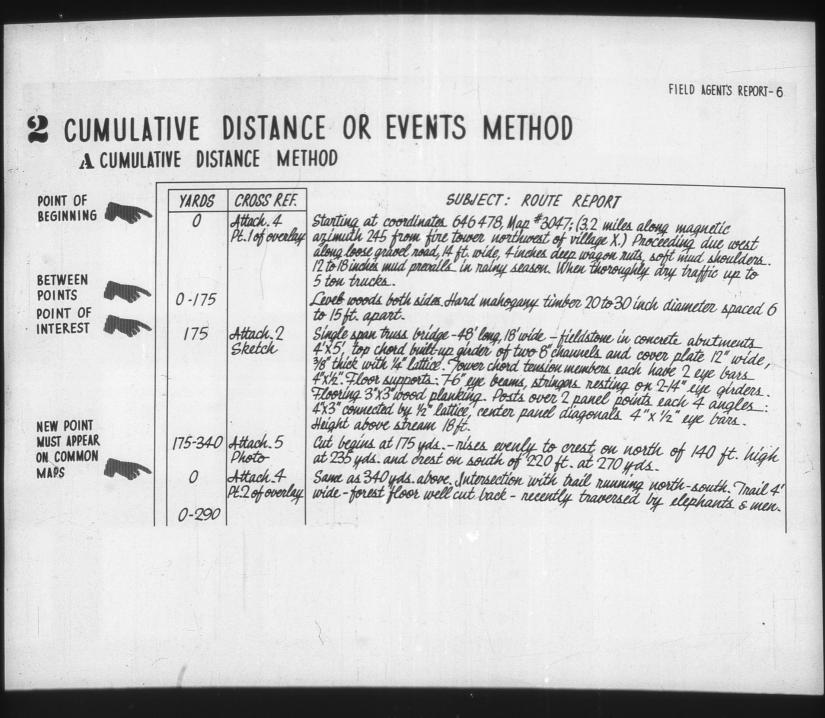
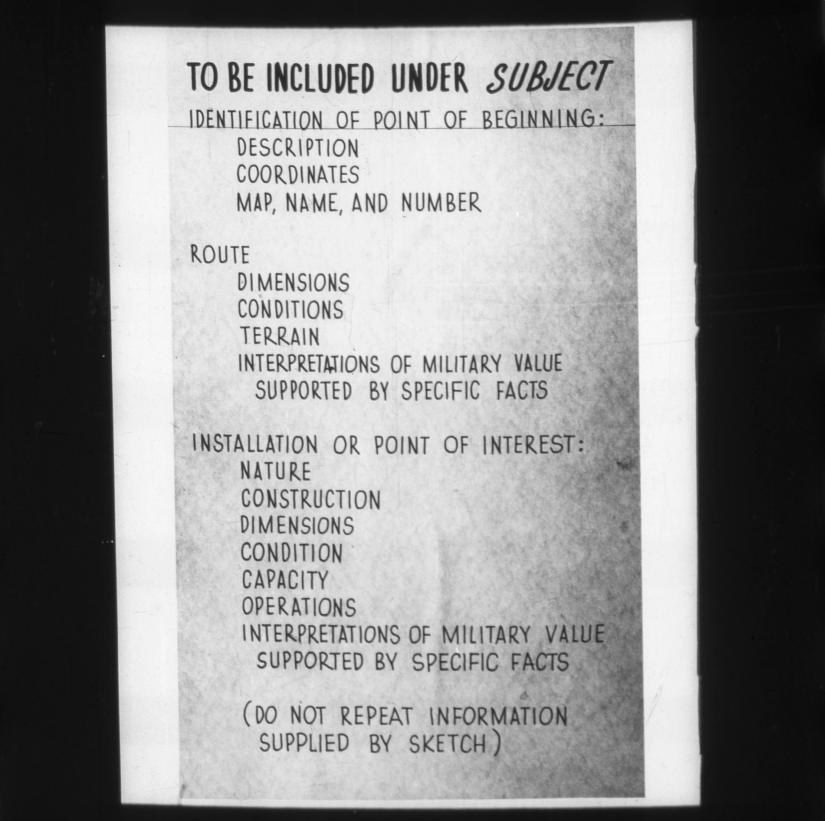
Ur-PowerPoint Training for World War II Spies

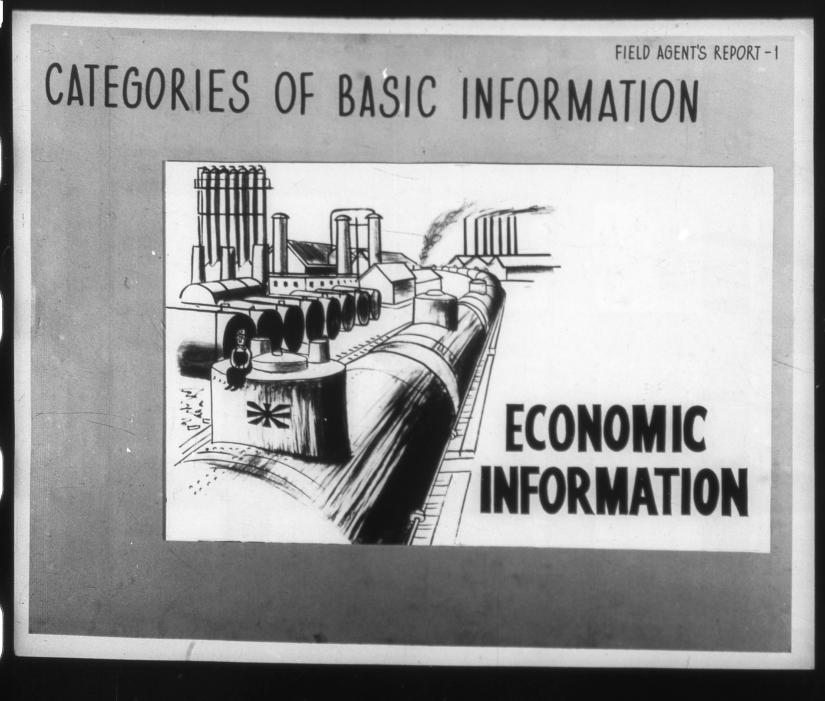
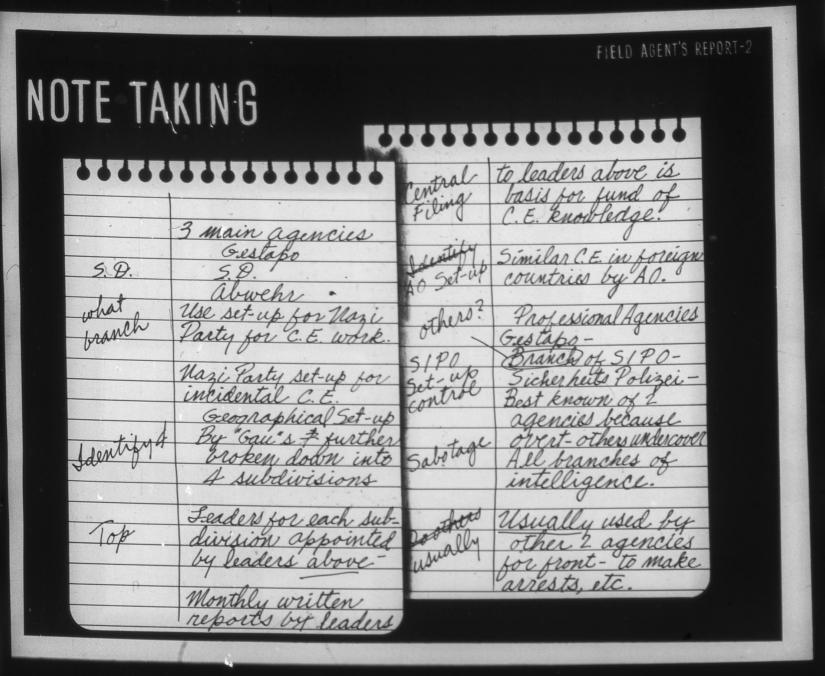
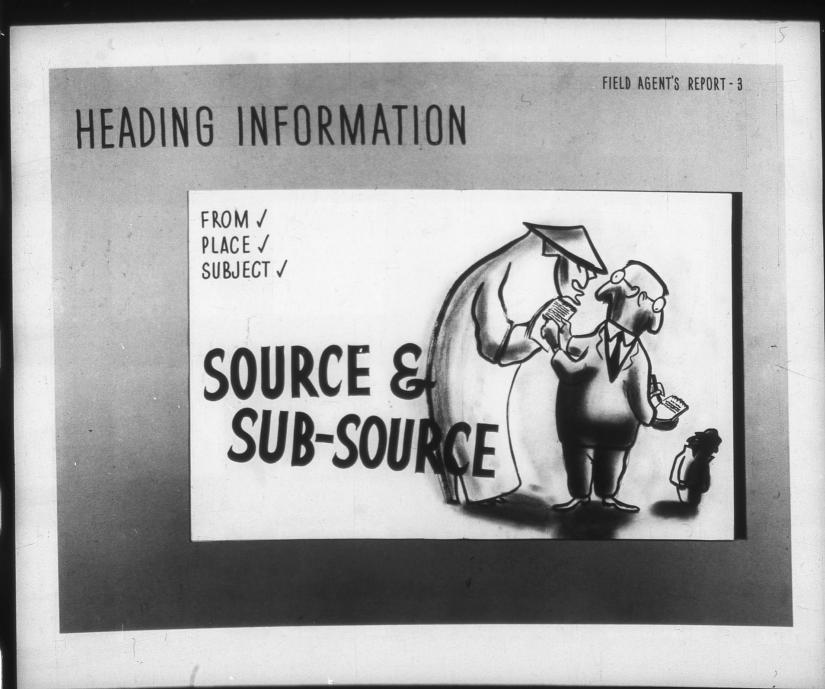
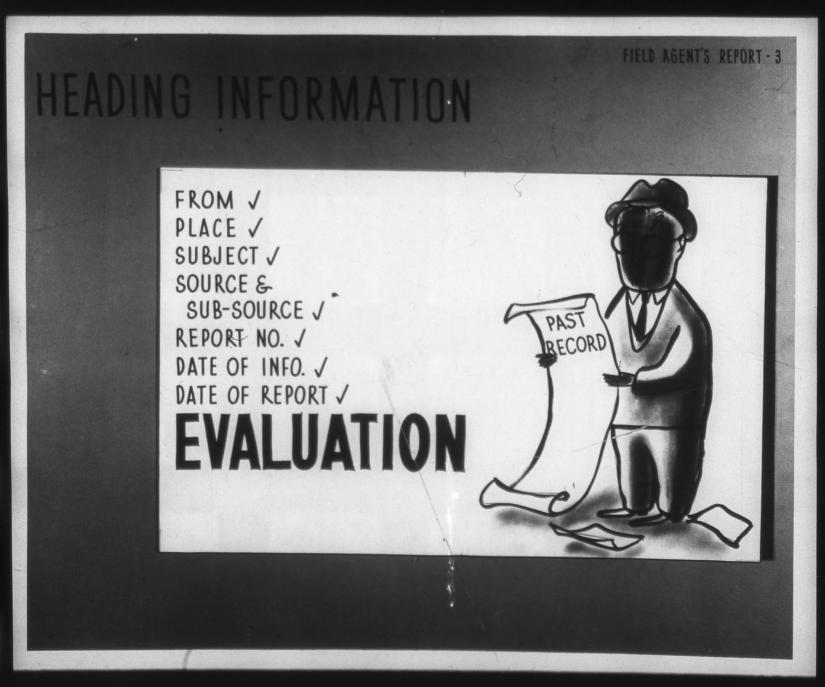
Found in the records of the World War II era U.S. intelligence arm, the Office of Strategic Services (OSS), this slideshow was originally a filmstrip, a format many older readers may remember from school. It was designed to drill student agent candidates in the format(s) used for reporting wartime intelligence information by OSS agents in the field. The drawings, unattributed, point to the talents many OSS personnel brought to presentations and display a subtle sense of humor, which may have made long hours in the classroom pass more quickly.

This strip was found in the National, Archives and Records Administration (NARA), un-preserved in a series of OSS training aids and was not accessible until I requested these images be digitized. Only a generalized description of the series exists in the catalog of the National Archives.

Professional researchers can bring this kind of detail into daylight, adding “sizzle” to your production, publication, or presentation.

“John Ford’s” D-Day Film – UPDATE!
Nine years ago this September, I authored a post on the National Archives and Records Administration’s “Unwritten Record” blog about a mysterious film I found in NARA’s research rooms. I uncovered the fact that this artifact was likely the first “documentary treatment” of the Operation Overlord assault on the beaches of Normandy, D-Day, June 6th, 1944. The film is influential because the shot selections largely duplicate the footage provided to the newsreels around the same time. Those selections have imprinted the imagery of D-Day in our collective imagination.

The story going around at the time I found the film was that Hollywood “A list” director John Ford, wartime head of the Field Photographic Branch of the Office of Strategic Services (“OSS”), recalled his wartime experiences, recounting that his unit compiled an overall report on the invasion that was shown to FDR, Churchill, and Stalin. Ford recalled his experiences in a D-Day interview from “American Legion” magazine from June 1964 on the twentieth anniversary of D-Day. Having trained and equipped hundreds of photographers, Ford watched the first few days of the assault from the decks of the USS Plunkett, a Navy destroyer. In my post I made a strong circumstantial case that the film I found at the National Archives matches this description. A letter in the OSS personnel folder for Captain John Ford recommends him for the Distinguished Service Medal on the strength of his activities documenting the D-day invasion, specifically mentioning:

“The returning film was assembled under his directions, and an overall D-Day report, complete with sound, was competed on D plus 5, and was shown to Mr. Winston Churchill. Copies were also flown to President Roosevelt and Mr. Stalin.”

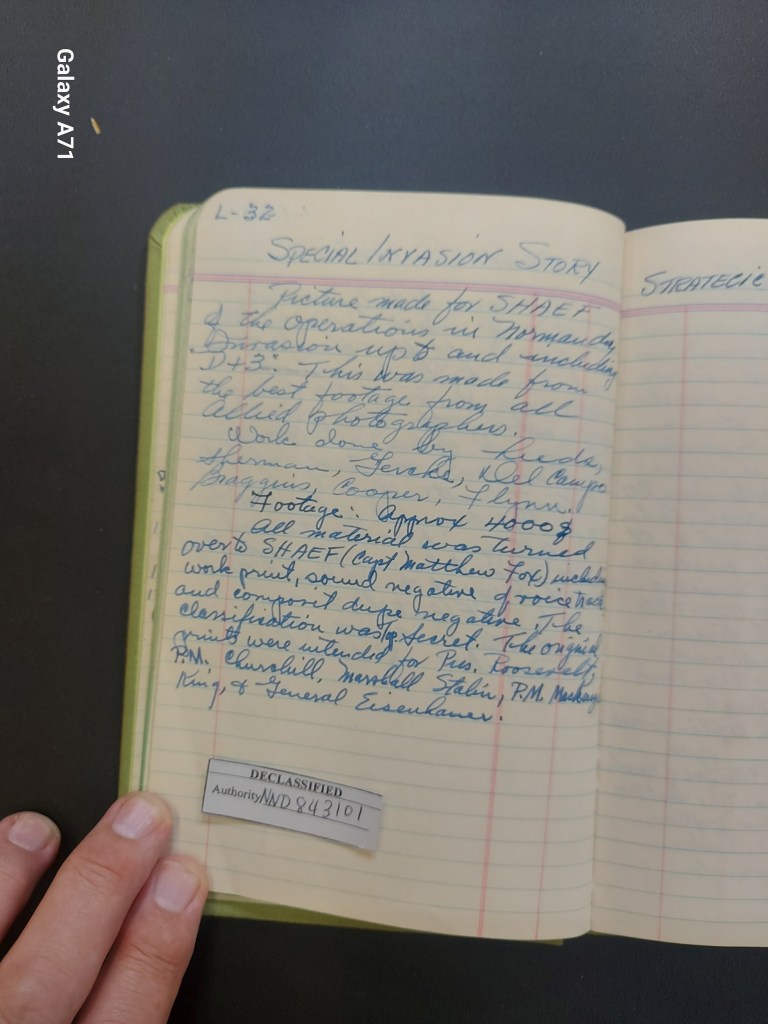
I was unable to verify these claims or make the link to my “found” film at the time of this earlier article. Thanks to some additional research I’ve undertaken at NARA, I’ve now made that link. Below, find an image from an OSS project log found in its London Field office files.

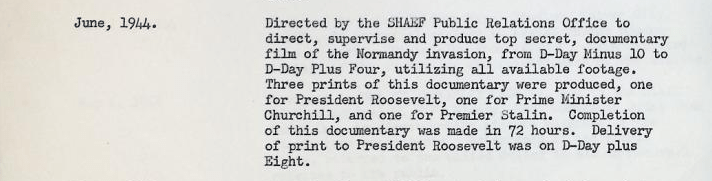
I was able to re-confirm this information in an “officer biography” found in the Official Military Personnel File for Frederick A. Spencer, Ford’s Chief Deputy at Field Photo.

These documents confirm that the production was intended for presentation to chiefs of state FDR, Churchill, and Stalin, adding that a print was delivered to FDR on D-Day plus 8, or June 14, 1944 and that the film was commissioned by the Supreme Headquarters Allied Expeditionary Forces (“SHAEF”) Public Relations Division (matching the film found at NARA). They contribute additional detail, too: that the original production was no more than “approx 4,000 ft”, or about 44 minutes (the finished production at NARA comes in at 33 minutes) and that the production elements (cut work print, sound negative, and composite duplicate negative were turned over to SHAEF. Finally, the project log gives the last names of OSS Field Photo personnel responsible for what had to be an epic 72 hour edit session that assembled this edit within days of the Operation Overlord assault.

Some details remain a mystery: those film elements remain to be found, the copy found at NARA appears to come from four work prints of uncertain provenance, also no production file from Field Photo has been found to date. The Field Photo assignment log also notes a copy was intended to be made available to Canadian Prime Minister William Lyon Mackenzie King, but the Spencer biographical note lists only FDR, Churchill and Stalin. Hopefully, records of the presentation of these film reels to the “Big Three” will be found in the future.

Without further adieu, this is the “mystery film”…

Aftermath of the Battle of Aachen

This reel is taken from a work print, a film element intended for editing purposes, and shows evidence of its age and a hard life. The film is one of hundreds of thousands at the National Archives and Records Administration (NARA) that remain unavailable digitally. For this particular roll, all that exists in the National Archives Catalog is a scan of an Army Signal Corps shot card. I shot this film from a flatbed film viewer in the public research room using a mirror-less digital camera.

The footage, dating from October 1944, shows the destruction wrought on the city of Aachen after many days of air and artillery bombardment followed by house-to-house street fighting. Civilian refugees struggle with their handful of possessions in suitcases through devastated streets. Sadly, such scenes of urban devastation seem very relevant today.

Only a professional researcher can provide timely access to such unseen archival footage and stills, adding impact to your production or publication.

“Gods of War”

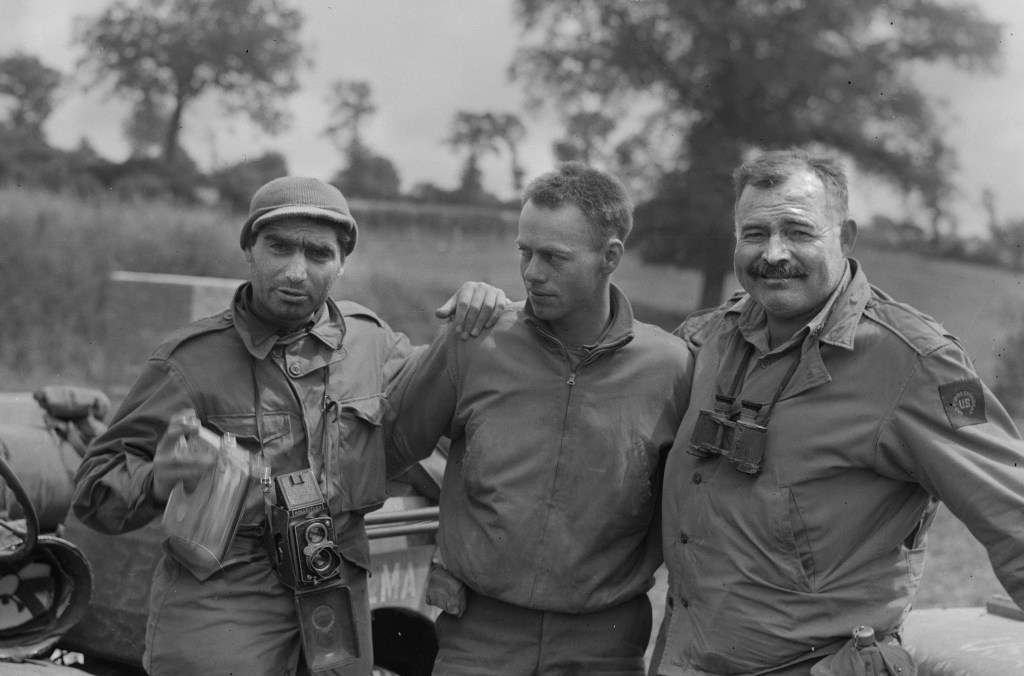
One of the “fringe benefits” being a professional researcher is the possibility of stumbling over fascinating images or footage while looking for something quite different. While looking for photos of a different war correspondent, I came across this image of ur-combat photojournalist Robert Capa and novelist and journalist Ernest Hemingway, following an armored advance in France in the summer of 1944. This image, shot by an Army Signal Corps photographer, is described in the National Archives Catalog, but no digital image was included with this record.

This is far from a rare pattern. The still photo collections at the National Archives and Records Administration (NARA) consists of millions of images shot by military or other government photographers, as well as a healthy complement of donated images. Right now, less than 10% of the special media content available at NARA are available on-line at all. Given the Agency’s budget constraints, it may be many years before more of this content is made available in a digital format. That means that professional archival media researchers are an important resource for clients looking to leverage rarely seen images and footage from these world class collections. Under Federal law, “Federal Works, or the work product of government employees or “work-for-hire” contractors, is not eligible for copyright protection. Professional researchers can help your production or publication shine, with PUBLIC DOMAIN special media material that won’t break your budget!