Back in the USSR!

Today’s film from the National Archives and Records Administration (“NARA”) illustrates a forgotten part of World War II, the titanic allied effort to arm and equip a future adversary: the Union of Soviet Socialist Republics (“USSR”). A major import channel for these supplies was through the Persian Gulf by way of a network of ports and airbases in Iran and Iraq.

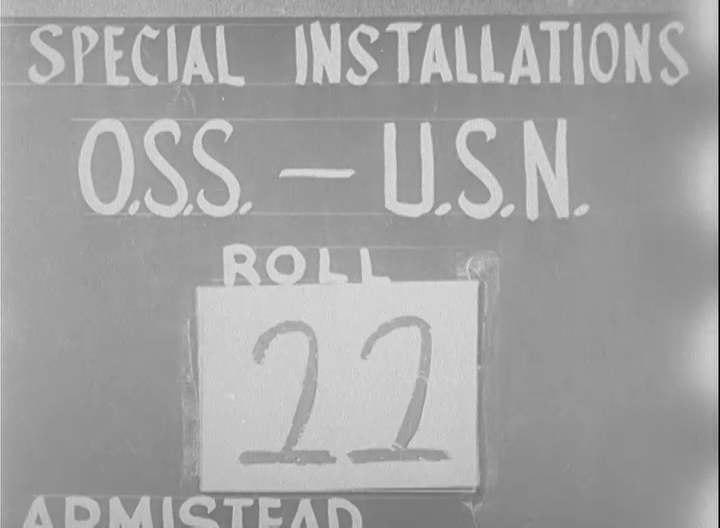
This roll, shot by the US Army Air Forces in 1943, opens with the American star livery on an aircraft being repainted red for the Russians. Hundreds of large crates and ships suggest this a large, port, probably in Basra, Iraq. Enlisted personnel move crated aircraft around, opening one to reveal a “factory-fresh” Curtiss P-40 Warhawk fighter plane. Russian and American officers inspect the shipments and greet each other. The attitude illustrated is very much “the enemy of my enemy is my friend”!

Films like these aren’t well described in NARA’s on-line catalog, truly accessible only by those willing to work in the physical research rooms with the background granted by years of experience. Hire a professional researcher for your next production or publication and add impact!

Casablanca!

Today’s film, shot by US Army Air Forces photographers, presents no mysteries. Instead the reel is a gift that keeps on giving. Shot during President Roosevelt’s allied conference in early 1943, the film touches many bases. It opens with a segment of FDR meeting with Free French commander General Phillipe LeClerc and continues with a session showing FDR conferring with British Prime Minister Winston Churchill (good closeups!) The roll concludes with an early sound film of Roosevelt conferring the Congressional Medal of Honor on Col. William Wilbur as Generals George Marshall and George Patton look on. The sound segment continues with interviews of African American service members.

This film is barely described in the National Archives’ Catalog by the title “PRESIDENT ROOSEVELT & [AND] CHURCHILL AT CASABLANCA”. No digital surrogate is available on the Catalog. This copy was made by pointing a digital camera toward a vintage film work print on the flatbed film viewers provided in the National Archives’ Moving Image and Sound Research Room. As the work product of US government photographers, the film is uncopyrighted and available for use.

Content like this is usually ONLY screenable in the National Archives Research Rooms. Professional archival researchers can unlock unique content like this for your presentation, publication or production.

Cavalry to the Rescue!

Today’s unexpected find is a film shot by the US Army Air Forces (“AAF”) during World War II, showing maneuvers in Australia including the involvement of US Cavalry!. It depicts the 112th Cavalry Regiment training in Australia and was filmed in January 1943. I’d welcome any Aussie to chime in if they recognize the terrain. This may be the last US Army large scale exercise using mounted cavalry.

The film was found at the National Archives and Records Administration (“NARA”) facility in College Park, Maryland. The description is limited to the AAF-created title, “Maneuvers in Australia”. No scene-by-scene written description is available on-line for this production, totaling seven reels of film assembled from 100′ camera rolls. The only available reference copy is a set of 35mm film work prints, so I captured this reel by pointing my camera toward the flatbed film viewer that NARA provides in the research room for screening purposes. The potential quality of the reel, with a professional film transfer, is very high!

Context is king for moving image research. An experienced eye can find clues to the backstory of the films at NARA even where the available descriptive material is lacking. A professional archival media researcher can leverage the full power of archives for your publication or production!

UPDATE:

Further research into descriptive assets that are only available in NARA’s research rooms reveals the unit in question was the 112th Cavalry Regiment. The AAF written descriptions don’t provide a granular location within Australia. Research into the 112th suggests this may actually have taken place on New Caledonia.

Tag in the Skies: Early “OPFOR” Training in WW2

Today’s film from the National Archives and Records Administration was a creation of the US Army Air Forces in World War II. The Army’s description identifies the plane in the first segment as “an unidentified British light bomber”. Aviation nerds among you will easily identify the aircraft as a German Junkers Ju 88 two-engine bomber. This one appears in British livery, complete with a Royal Air Force squadron code “M”, used for flying schools and advanced training squadrons. The plane is chased by an American P-47 and a British Spitfire fighter. The most likely explanation? This represents an early example of “OPFOR” training. OPFOR (short for “opposition force”) matches fighter aircraft against their likely opponents, training pilots to counteract the enemy’s strengths and exploit their weaknesses.

The film itself was a copy of a 16mm Kodachrome original. The original daylight balanced film would have had a low light sensitivity rating of 25 ISO, which would be most appropriate for filming in bright sunlight. The jerkiness of the recorded material suggests heavy vibration from the chase plane the photographer was shooting from. Several other shots in this reel show the film struggling to find enough light to fully expose the film, resulting in dark scenes and difficulty nailing focus. Those issues made creating this digital copy, from a reversal film print displayed on the flatbed film viewer that NARA provides for screening purposes, challenging as well.

Later shots feature activities surrounding a B-17 squadron, including a few shots of Captain Clark Gable one of numerous Hollywood actors who enlisted, those shots suffer from the exposure and focus problems mentioned above.

Often there is more than meets the eye to the footage NARA makes available. Past records management failures often mean that scene descriptions were written without the notes of the photographer, so the full context of the film record is lost. An expert archival media researcher can often put the pieces of the puzzle back together, adding value for your production or publication. Hire an archival media researcher for your next project!

The “Camp Activities” Mystery: Discovering Normandy Airfields

Today’s film presents a mystery. The given title of this Army Air Forces (“AAF”) film found at the National Archives and Records Administration (“NARA”) is simply “Camp Activities”. This is the first of four rolls showing the construction and early operation of an Advanced Landing Ground airstrip in Normandy about 10 days after D-Day, making this one of the earliest Allied airfields in liberated France.

The description provided by the AAF provides no location and the only clue is a brief shot of a local church or abbey at 1:25. It looks like the back half of the church tower is missing.

The strip was apparently setup in a farmer’s field. The camp for Army personnel looks like it was setup next to one of Normandy’s numerous canals, but apparently the soldiers and airmen also setup in nearby wrecked gliders, suggesting this was a glider landing ground on D-Day. The film includes numerous shots of WWII aircraft: P-47 fighters, Spitfires, C-47’s, Horsa gliders, and CG-4A gliders in action (and also as wrecks on the ground).

My suspicion is that this was the Carentan Army Airfield (Advanced Landing Ground A-10), which is today the site of the Normandy Victory Museum. These airfields provided life-saving landing alternatives for aircraft and crews in trouble. They were often used to evacuate casualties as well. I’m hopeful that Norman locals can chime in here to help conclusively identify the site!

UPDATE!

Many thanks to my good friend and colleague Tom Hogan who identifed the church as Saint-Côme-du-Mont near Carentan. Further information received from a Normand suggests this is landing strip A-6, aka Beuzeville/Ste. Mère Eglise airstrip, since it was closer to the glider landing ground that figures so prominently in this film.

Context is critical to gain the full impact of archival film for your production. An experienced archival media researcher can leverage the full power of archives for you!