Moving Image from D-Day Found

This World War II US Navy footage found at the National Archives and Records Administration shows combat footage from a minesweeping operation off of New Guinea. Unremarked for decades, a short segment of film at the end of this reel is unrelated footage from a camera affixed to a landing craft, LCI(L), off the coast of Normandy, France for the D-Day seaborne assault on Europe.

The National Archives on-line catalog entry contains the text of the US Navy’s shot descriptions. The last segment, starting at about 9:44, is undescribed. My sharp-eyed colleague, Tom Hogan, identified the footage. Based on unique physical characteristics of the boat, he has identified this as LCI(L)-88. That particular boat was one of several landing craft selected by the Office of Strategic Services (OSS) for the installation of a fixed motion picture film camera of the unloading operations.

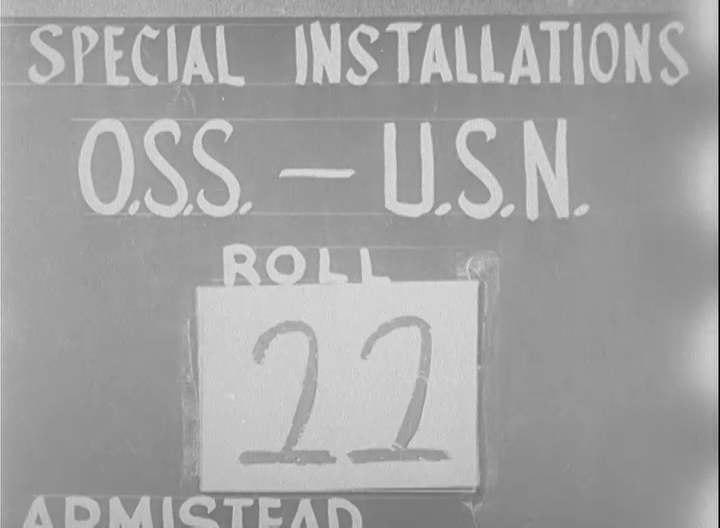
A team from the OSS’s “Field Photographic Division”, commanded by John Ford, spearheaded a crash program to install the cameras in April and May of 1944. Below is a screenshot of the prepared title that appears in this segment.

On-line descriptive material is sometimes incomplete, misleading or just plain wrong. A professional media researcher lends a critical eye to material available on-line. Add value to your project, presentation or publication!

Rediscovering WWII’s Forgotten Films: A Unique GI Adventure

Happy 2026 to all!

Today’s film is a forgotten piece of fluff found in the “Combat Subjects” series of the US Army Air Forces in WWII. Basically, a few GI’s find a derelict Kubelwagen (aka “German Jeep”) and decide to get it running again! Volkswagen resurrected the design in the late 60’s as “The Thing”.

The story was a welcome diversion from the grim tales of war. The fact that it has sound makes it stand out. Only a handful of films with composite sound are found in this series. There were a few ways to record sound optically but field recording was a different thing from commercial film. In this case the recording was likely made on transcription discs, later converted to an optical sound track in a lab.

Films like this are under-described in the National Archives on-line catalog, and are usually unavailable digitally. This particular film was recorded off the flatbed film viewers in NARA’s research room, no other digital copy exists. A professional media researcher can navigate the resources available in the research room and add value to your next production!

Posts

Latest from Historicity Research Services!

  • This World War II US Navy footage found at the National Archives and Records Administration shows combat footage from a minesweeping operation off of New Guinea. Unremarked for decades, a short segment of film at the end of this reel is unrelated footage from a camera affixed to a landing craft, LCI(L), off the coast…

  • Happy 2026 to all! Today’s film is a forgotten piece of fluff found in the “Combat Subjects” series of the US Army Air Forces in WWII. Basically, a few GI’s find a derelict Kubelwagen (aka “German Jeep”) and decide to get it running again! Volkswagen resurrected the design in the late 60’s as “The Thing”.…

  • Back in the USSR!

    Today’s film from the National Archives and Records Administration (“NARA”) illustrates a forgotten part of World War II, the titanic allied effort to arm and equip a future adversary: the Union of Soviet Socialist Republics (“USSR”). A major import channel for these supplies was through the Persian Gulf by way of a network of ports…

Back in the USSR!

Today’s film from the National Archives and Records Administration (“NARA”) illustrates a forgotten part of World War II, the titanic allied effort to arm and equip a future adversary: the Union of Soviet Socialist Republics (“USSR”). A major import channel for these supplies was through the Persian Gulf by way of a network of ports and airbases in Iran and Iraq.

This roll, shot by the US Army Air Forces in 1943, opens with the American star livery on an aircraft being repainted red for the Russians. Hundreds of large crates and ships suggest this a large, port, probably in Basra, Iraq. Enlisted personnel move crated aircraft around, opening one to reveal a “factory-fresh” Curtiss P-40 Warhawk fighter plane. Russian and American officers inspect the shipments and greet each other. The attitude illustrated is very much “the enemy of my enemy is my friend”!

Films like these aren’t well described in NARA’s on-line catalog, truly accessible only by those willing to work in the physical research rooms with the background granted by years of experience. Hire a professional researcher for your next production or publication and add impact!

Casablanca!

Today’s film, shot by US Army Air Forces photographers, presents no mysteries. Instead the reel is a gift that keeps on giving. Shot during President Roosevelt’s allied conference in early 1943, the film touches many bases. It opens with a segment of FDR meeting with Free French commander General Phillipe LeClerc and continues with a session showing FDR conferring with British Prime Minister Winston Churchill (good closeups!) The roll concludes with an early sound film of Roosevelt conferring the Congressional Medal of Honor on Col. William Wilbur as Generals George Marshall and George Patton look on. The sound segment continues with interviews of African American service members.

This film is barely described in the National Archives’ Catalog by the title “PRESIDENT ROOSEVELT & [AND] CHURCHILL AT CASABLANCA”. No digital surrogate is available on the Catalog. This copy was made by pointing a digital camera toward a vintage film work print on the flatbed film viewers provided in the National Archives’ Moving Image and Sound Research Room. As the work product of US government photographers, the film is uncopyrighted and available for use.

Content like this is usually ONLY screenable in the National Archives Research Rooms. Professional archival researchers can unlock unique content like this for your presentation, publication or production.

Cavalry to the Rescue!

Today’s unexpected find is a film shot by the US Army Air Forces (“AAF”) during World War II, showing maneuvers in Australia including the involvement of US Cavalry!. It depicts the 112th Cavalry Regiment training in Australia and was filmed in January 1943. I’d welcome any Aussie to chime in if they recognize the terrain. This may be the last US Army large scale exercise using mounted cavalry.

The film was found at the National Archives and Records Administration (“NARA”) facility in College Park, Maryland. The description is limited to the AAF-created title, “Maneuvers in Australia”. No scene-by-scene written description is available on-line for this production, totaling seven reels of film assembled from 100′ camera rolls. The only available reference copy is a set of 35mm film work prints, so I captured this reel by pointing my camera toward the flatbed film viewer that NARA provides in the research room for screening purposes. The potential quality of the reel, with a professional film transfer, is very high!

Context is king for moving image research. An experienced eye can find clues to the backstory of the films at NARA even where the available descriptive material is lacking. A professional archival media researcher can leverage the full power of archives for your publication or production!

UPDATE:

Further research into descriptive assets that are only available in NARA’s research rooms reveals the unit in question was the 112th Cavalry Regiment. The AAF written descriptions don’t provide a granular location within Australia. Research into the 112th suggests this may actually have taken place on New Caledonia.